
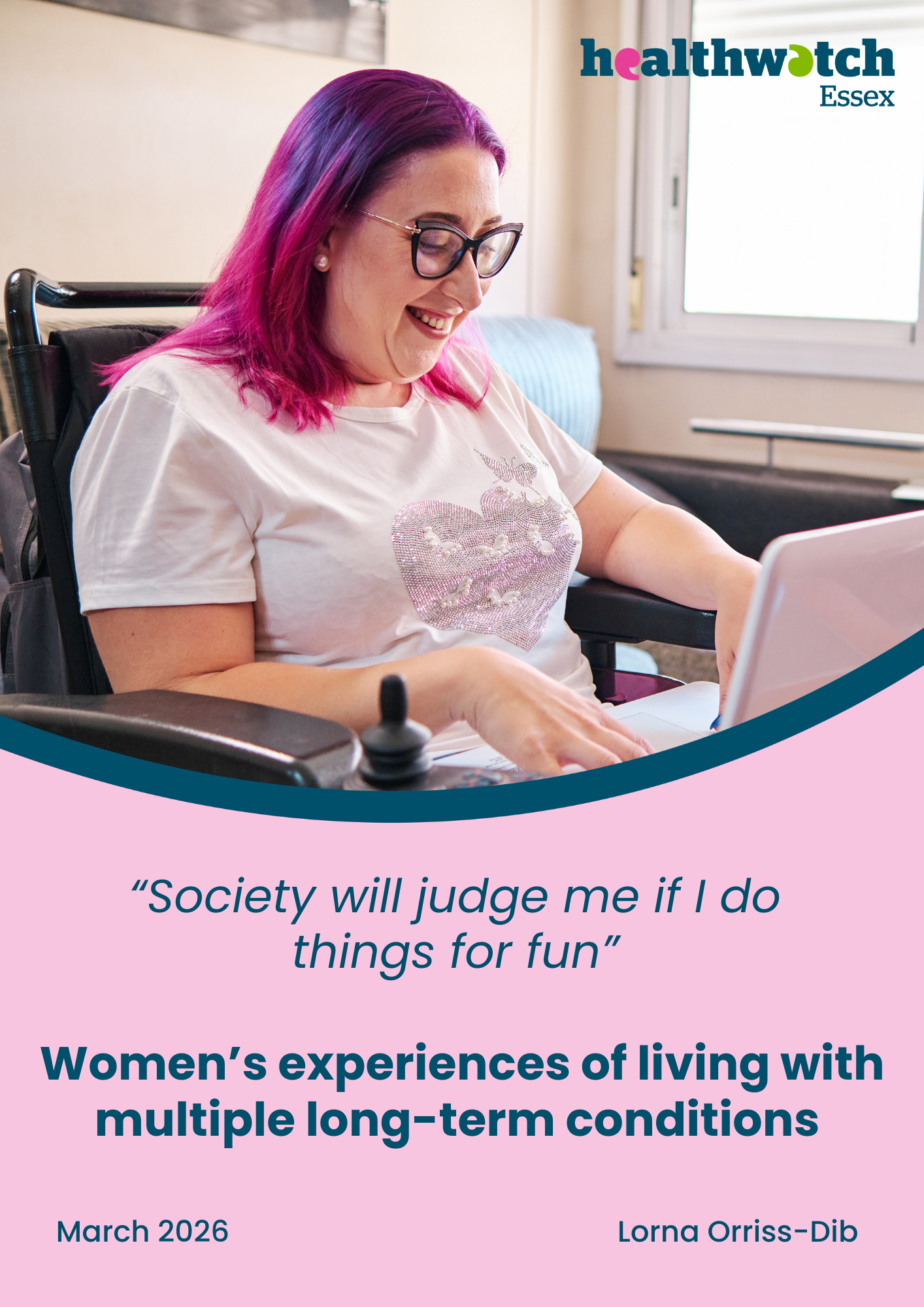
Today, we’ve launched our latest report which explores women’s experiences of living with multiple long-term health conditions.
“We’re managing it 24/7, 365 days and we might get 10 minutes of your time, every six months.”
One in four adults in England live with two or more long-term health conditions. Women are more likely to develop long-term conditions at an earlier age compared to men and there has been a steady rise in the number of working age adults diagnosed with multiple long-term conditions (MLTC).
Health care services frequently focus on singular conditions, and this can result in fragmented service delivery and a lack of holistic care. Women living with several long-term conditions are having to navigate multiple specialties and care pathways, alongside caring for their family, studying or working. There is little research exploring the lived experiences of those who live with MLTC, particularly from a female perspective.
Our latest report captures the lived experiences of women living with MLTC. The report reveals the challenges women face navigating care, the impact of positive and negative interactions with healthcare professionals, ableist attitudes across society and the experiences of neurodivergent women with MLTC. Participants shared how accessibility could be improved across services, what collaborative care means for them and how dismissive attitudes had resulted in lengthy diagnosis journeys and poorly managed symptoms.
 Research Officer Lorna Orriss-Dib explains why this work is so important:
“Data shows that women are spending more years in poor health compared to men, and women from the most deprived and underserved areas are developing long-term conditions at an earlier age. Last month, the UK Government published their revised Women’s Health Strategy for England. We welcome increased research and funding into areas such as menstrual health, maternity care and menopause. Our findings show the importance of listening to women, believing them when they describe their symptoms and ensuring they receive timely care. This project also reinforced the importance of including auto-immune conditions and energy limiting conditions such as ME and Fibromyalgia, under Women’s Health. Whilst these conditions affect both men and women, they are more likely to develop in women”.
Katherine Deane shared her experiences as part of the project:
“As a woman with multiple diagnoses I thought it was important to take part in a project that focussed specifically on that issue. Medicine is organised around a single diagnosis or system (lungs, skin, cancer etc). This means that people with MLTC are often trying to balance differing medical opinions on how we manage our various diseases – and the medical advice can sometimes be contradictory or impractical.
The current evidence base is so male biased and it’s important to hear women’s voices – we often have a different experience of symptoms due to hormonal fluctuations and due to the medications mainly having been tested on men not women. Also, women often take on the majority of housework and childcare. These are activities that do not take a break. They don’t care if you are having a flare, the kids still need to be fed, the clothes still need to be washed. How we balance our health in the face of these mandatory actions is important.”
Reflecting on what she would like to see from service providers in the future, Katherine shared her thoughts:
“Care that listens and responds to patient’s real-world experiences is essential. Being told to ‘take it easy’ when you have a toddler to look after is a joke – and not a good one. Practical advice about how to plan easy to prepare meals, to keep medications safe, to pace workloads, is far more important and requires professionals to really understand the context people are living in”.
Katherine also wanted to highlight the positive experience she had taking part in the study:
“Lorna is so easy to talk to. She really supported me through the interviews. She was genuinely interested in how to support women optimise their health – and how we can support professionals to do this better”.
The report and executive summary can be found here. You can learn more about the project in our Research Reflections podcast here.